
New Waterjet Cutting System Ensures the Quality of High-Strength Grades
15.09.2026 | Ilsenburger Grobblech GmbH
- Commissioning of the new waterjet cutting system
- Cutting of high-strength steels
- Precise processing without heat input
Ilsenburger Grobblech GmbH is utilizing a new waterjet cutting system for the processing of high-strength steels. The technology enables precise cutting without heat input, streamlines production processes, and reduces CO₂ emissions. Following a successful testing phase, the system has now been integrated into regular production operations.
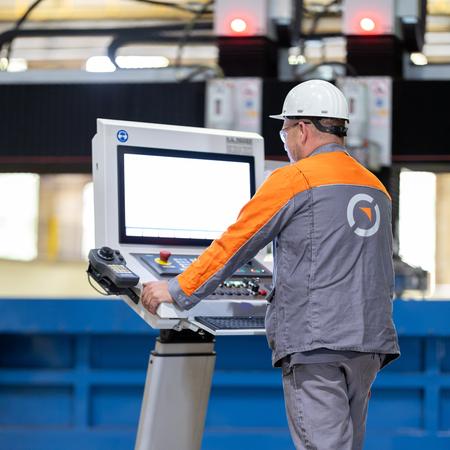
The more advanced a steel grade, the greater the demands placed on its processing. High-strength and abrasion resistant grades, in particular, are sensitive to the heat generated by conventional cutting methods such as oxy-fuel and plasma cutting. While these processes enable fast cutting speeds, they can also alter the material properties along the cut edges.
With the commissioning of a new waterjet cutting system, a process is now available that separates premium heavy plate products without thermal impact, preserving their properties right up to the final edge. This targeted investment expands our production capabilities and further strengthens our competitiveness in the heavy plate market.
Whereas oxy-fuel cutting generates temperatures of several hundred degrees Celsius, waterjet cutting is a purely mechanical process. A water jet accelerated to three times the speed of sound and mixed with fine garnet abrasive cuts through the steel without any heat input. This method offers significant advantages, particularly for high-strength and abrasion resistant steels. It prevents microstructural changes along the cut edges and reduces the risk of cracking. At the same time, it eliminates the need for the preheating that is often required for particularly demanding grades prior to cutting.
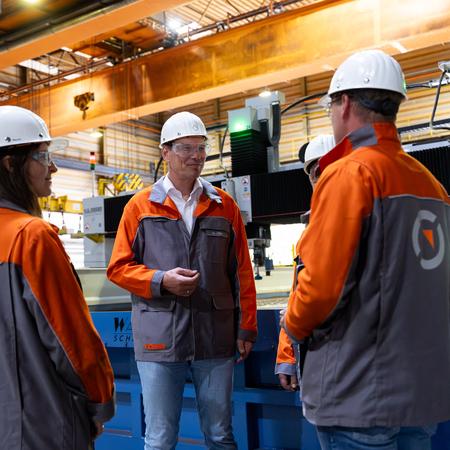
“In some cases, we process plates measuring more than 30 square metres, and they must exhibit exactly the same properties across the entire surface. The cutting process must not compromise this quality,” says Dr. Robert Kühn, Chairman of the Management Board of Ilsenburger Grobblech GmbH.
The system supplied by H.G. Ridder Automatisierungs-GmbH is among the largest waterjet cutting installations in Europe. Its cutting table is 18 metres long and accommodates cutting widths of up to 5.7 metres. Two high-pressure pumps generate pressures of up to 3,800 bar. The system also enables the parallel processing of plates, providing additional flexibility within the production workflow. Although waterjet cutting operates at lower cutting speeds than thermal processes, the elimination of preheating requirements and additional material handling steps delivers significant benefits across the overall production process.
With the new installation, Ilsenburg is further strengthening its position in the market for high-quality specialty steels. Customers in industries such as mining, construction machinery, power generation, and security applications will benefit from shorter lead times and consistently high product quality.
In addition to its technological advantages, the investment also supports the company’s sustainability objectives. As neither preheating nor thermal cutting processes are required, natural gas consumption is significantly reduced. The system’s high-pressure pumps are powered electrically, with an increasing share of the required electricity sourced from renewable energy. Resources are also used as efficiently as possible. Water circulates within a closed-loop system and only requires minimal replenishment. The garnet abrasive used during cutting is collected, returned to the supplier, and subsequently reprocessed.
For Dr. Kühn, the strategic importance of the investment is clear: “The waterjet cutting system combines outstanding product quality with improved sustainability and strengthens our competitiveness in a demanding market environment.”
With the successful commissioning of the new installation, Ilsenburger Grobblech GmbH has added another key component to its production chain for premium specialty steels while simultaneously advancing a more resource-efficient approach to steel processing.